
The Northern Loch Ness Monster
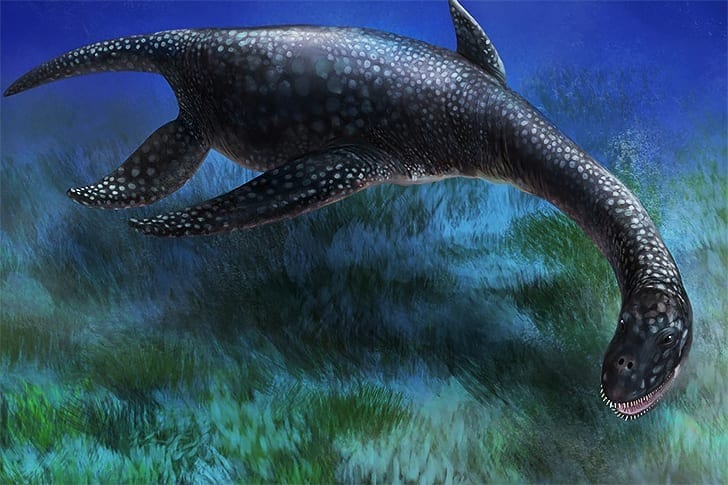
Antarctica can be a gold mine for paleontologists, considering how many remnants of the ancient past must wait beneath its icy surface. Just take the gigantic Loch Ness Monster look-alike from the region, for example. In 2017, researchers unfroze the fossils of the ancient creature in Seymour Island.
Nearly 1,760 pounds of the pre-historic giant were found and excavated for further examination. According to the findings, the towering creature measured 36 feet, all the way from the muzzle to the tail, and weighed 15 tons, making it the bulkiest specimen of its kind on record. Pretty impressive, right?
Abandoned Seacraft On Antarctica's Shore
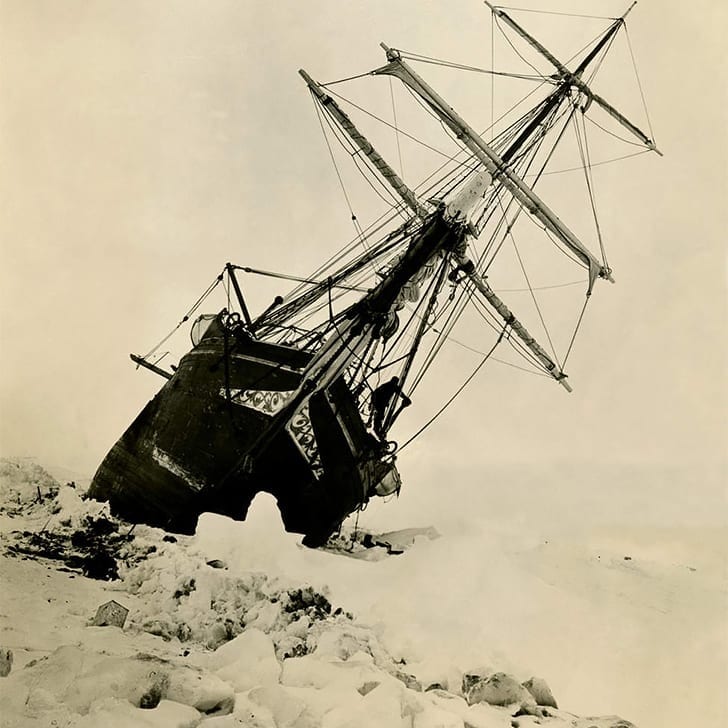
Ernest Shackleton's ship Endurance became a subject of worldwide fascination after its famous disastrous expedition to Antarctica. The seacraft successfully reached the Weddell Sea, but impenetrable mounds of ice overwhelmed the craft.
Countless efforts resolutely continued to set the ship free, but the polar region's low temperatures restricted the ice from melting, and eventually, the crew left the vessel stranded. It has now sunk a great deal, and even the modern equipment of the 21st century has been so far unable to unearth the wrecked craft. The 300-ton transport has now officially gone down in history as a 'ghost ship.'
Eerie Red Snow
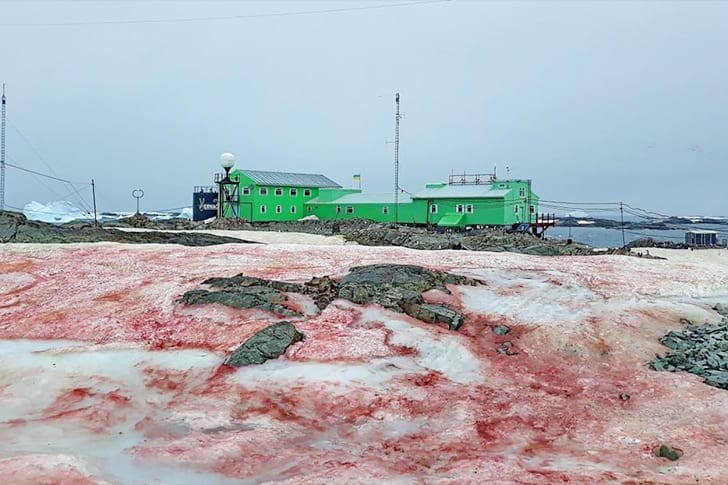
It's one thing to watch color-changing ice in sci-fi movies, but it's quite different and spooky if you witness the same in real life. The remote and enigmatic region of Antarctica has brought many science-fiction tales to life. This time, it's bloody snow.
Scientists stumbled upon red ice on the continent, which resulted from the thawing ice-caps and the activation of algae thawing from deep freeze after an arctic winter. This happened when the region experienced a stint of high temperature. The crimson snow was an outcome of some bizarre chemical reaction. Science can indeed be fascinating at times!
Remains Of A Star
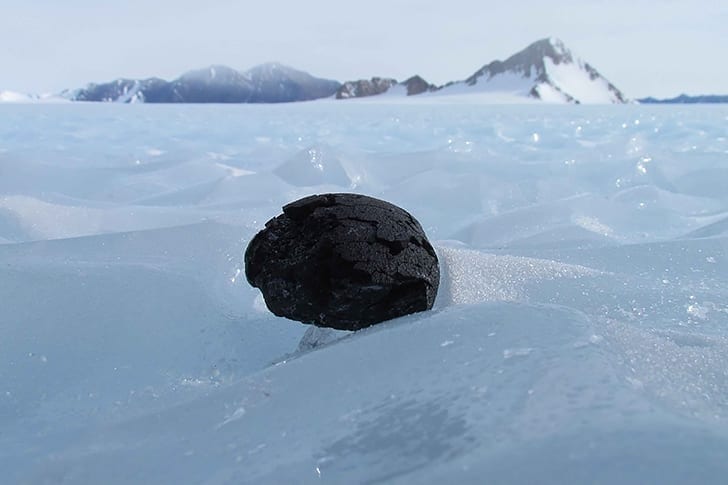
If the polar continent of Antarctica has not caught your fancy yet, it will now. Apparently, the scientists have excavated a star's remains, which came crashing down after a cosmic explosion many millennia ago.
No wonder meteorite experts have an unreal love for the place! The intriguing part is that the celestial body's remnant is said to be older than the sun itself! This discovery caused quite a stir in the scientific world and public, as it gave us a deeper insight into what our ever-expanding universe was like millions and billions of years ago.
Mysterious Antarctic Alps
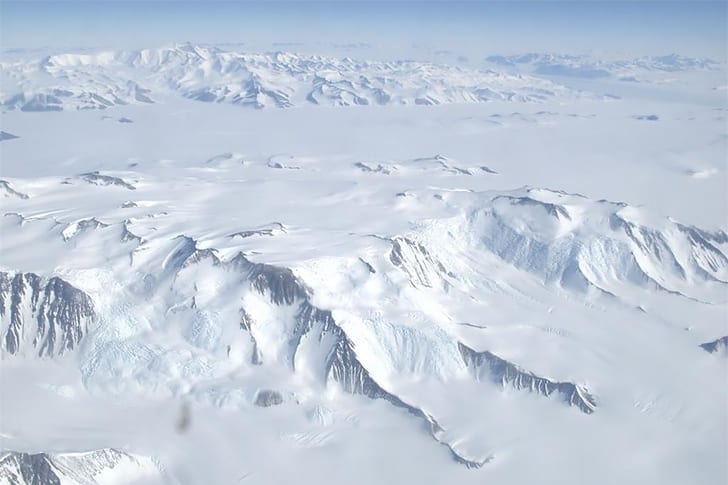
Antarctica never fails to mesmerize us. Not only the ice-covered plain holds plenty of uncovered secrets, but now even the mountainous regions have entered the competition. The experienced scientists from Russia discovered the high ranges, towering over 8,000 feet, some five decades ago.
Yet it was not until the 2010s that scientific experts did a thorough mapping of the mysterious alps. According to the findings, the snow-capped hills ran over 750 miles in the East of the polar continent. Though we have already learned a great deal about the mounts, there’s still much more to discover!
Mummy Atop The Andes Peaks
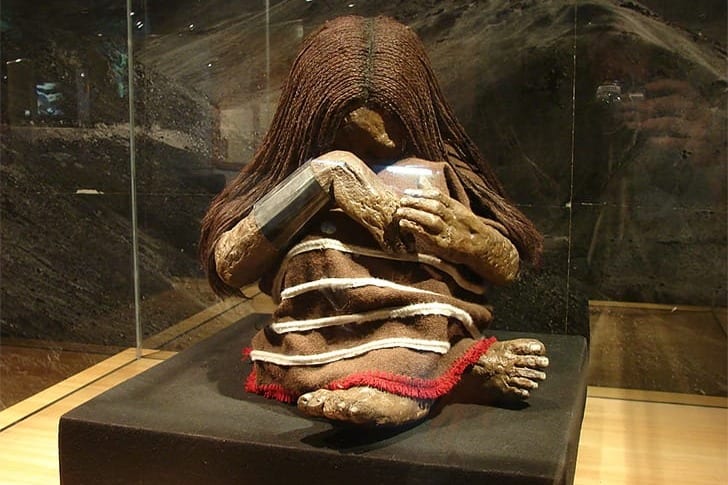
The mountain ranges of the Andes houses an assortment of remnants from the ancient past. But out of the exciting things it harbors, the mummy of a child is the one that captivates people the most.
Dubbed as the “Plomo Mummy,” locals found it in the Chilean parts of the icy summits in the year 1954. The boy is estimated to be somewhere around eight or nine years old, considering the height and the build of the body. But what’s interesting is that the child is assumed to be a human offering to the gods that followed after completing an ancient sacred ritual.
The Maiden Of Icy Summits
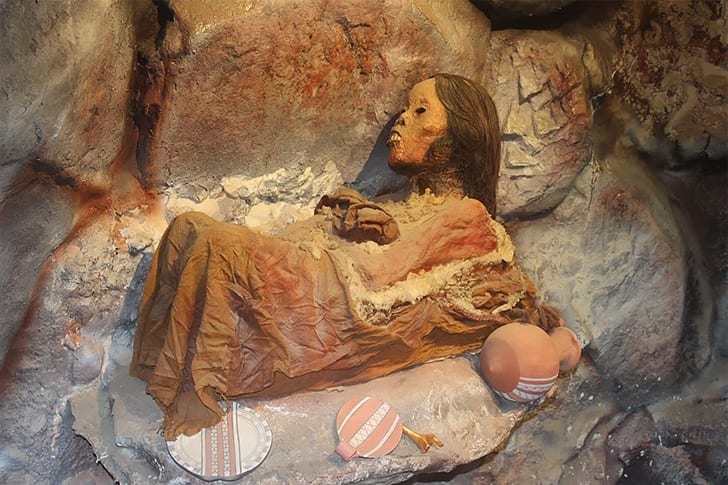
While Chilean Andes has its fair share of artifacts to offer, Peru, too, is home to age-old bodies. The most famous of these are the remnants of a maiden, later called "Juanita," she was found on Mount Ampato's summit in Peru.
Juanita first came to light of modern-day eyes following a volcanic eruption in an unbelievable condition. The body was frozen inside out, and it was baffling how the parts remained intact for so many years. Surprisingly, even the food she consumed before freezing for centuries was still inside the gut's remains when first found.
Iceman In The Ötztal Alps

It would have been a crime to speak of so many forgotten past mummies and not mention the fabled Otzi. This iceman first made headlines upon discovery in the beautiful region of the Ötztal Alps. Thus, the name.
According to the theories that took rounds after his unearthing, the person is possibly a Neolithic traveler who wandered the earth in full vigor in 3300 BCE. Judging from what’s left of the body, his age at the time of his passing away was determined to be somewhere between twenty-five to thirty-five. Though, the exact cause of the mysterious ancient human's demise is still an enigma.
What Happened To Ötzi

Ötzi kept our scientists and people mystified for years, ever since his body first baffled scientists. More specifically, it was his demise that kept our experts in the loop. After numerous examinations and x-rays, some professionals guessed that the cause of his passing away could've been due to an arrow struck at his left shoulder.
The fatal wound could have caused the man to bleed till he took his last breath. Though, what pushed a perpetrator to take Ötzi's life remains a mystery that has kept the world in its grasp for years!
Ötzi's Brother?

Just when the world was recovering from the shock of Ötzi's discovery, another iceman in Canada cropped up. Though, unlike our former pal, this one had a handful of tools with him. But here's the catch. While in the case of Ötzi, we knew very little of his origin, his counterpart's story was different altogether.
Scientists were not only able to discover the origin of the remains but also seventeen of his living descendants today, owing to their DNA analysis. The examination also revealed that this gentleman might have wandered the earth for over fifty years, an impressive lifespan for the time.
Frozen World War I Soldiers
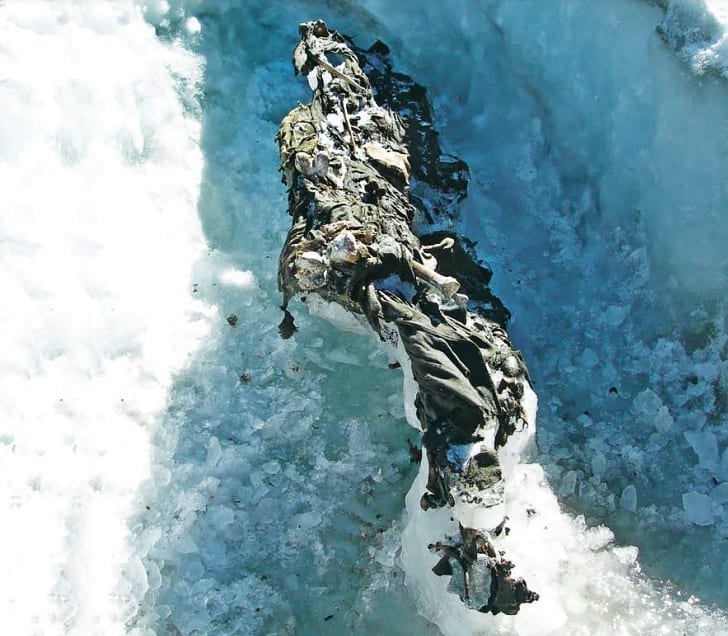
Over the years, Ice has developed a reputation for keeping things preserved under it, and that includes the remains of two soldiers who participated in World War I. The Austrian young men's remains were found in the Presena Glacier in Italy in 2012, almost a century since they passed on.
The discovery is a stark reminder of how bad the war was and how many young lives were tragically lost in the process. As always, you can trust frost to preserve bits of history, including the harrowing moments, and reveal it when you least expect!
Life In Ice
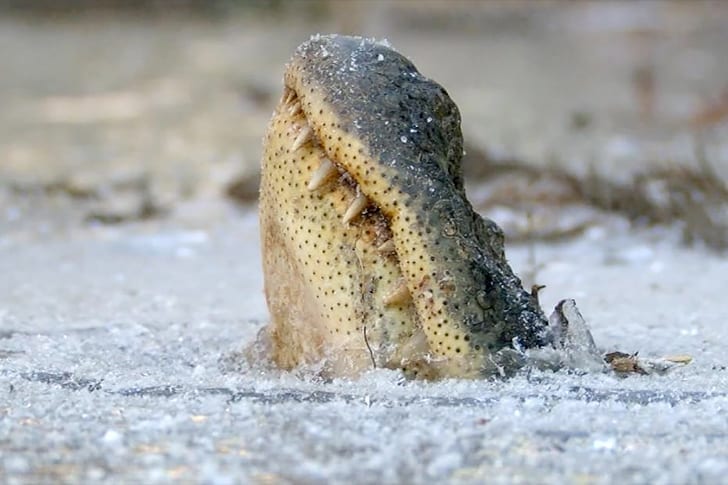
Alligators have been around a lot longer than humans and they, too, have evolved and adapted to their habitats. However, something we didn't know they could do, is stay frozen in a state of brumation for up to four months!
George Howard, a Swamp Park manager, stumbled across some reptiles that were frozen and, at first glance, thought that they were tree stumps. After close observation, he found out that they were actually living things sluggishly waiting for warmer days. Quite ingenious, to say the least, and it's no wonder the alligators live so long.
Ice Cold Fox
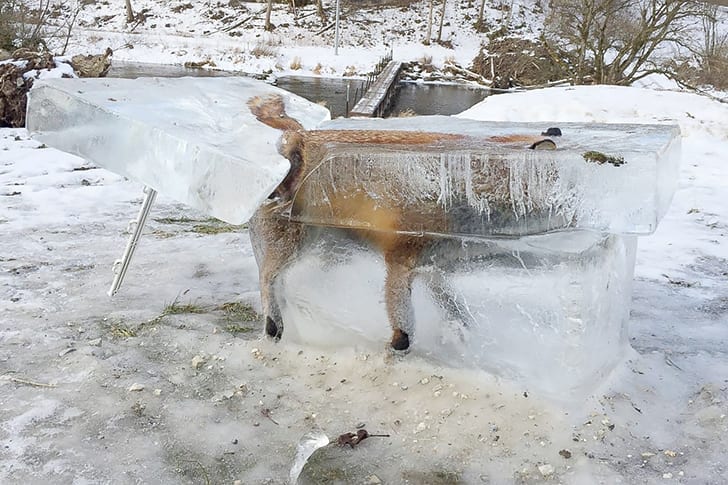
While alligators can live in ice and not pass away, foxes are not nearly as lucky, though, and when the temperatures get too low, they're in imminent danger. One man, Franz Stehle, found a frozen fox in his native Germany along the Danube River in 2016. And if anyone had any doubts about these furry vulpine predators faring against freezing temperatures, the proof was in the pudding.
Instead of leaving the creature in frozen mass, however, Stehle and his son decided to carve out the fox and got this mesmerizing, intact mammal. Not the most ideal way to preserve animal remains, but nature always finds a way.
Fresh Frozen Catch?
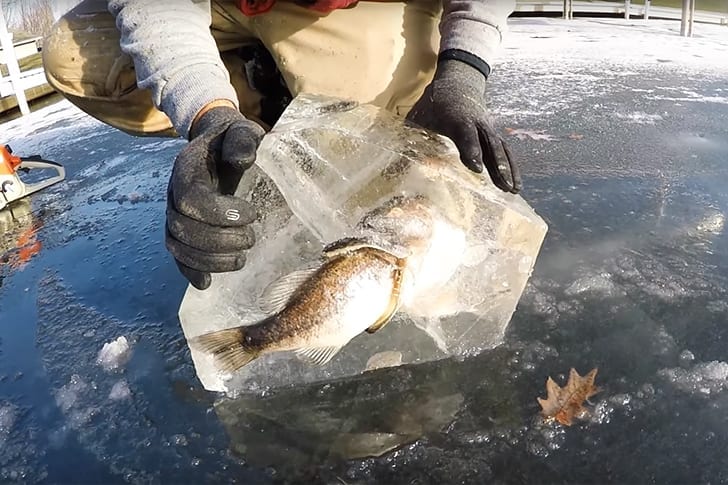
Sometimes, nature serves us images that look impossible, things that we've never seen before. When Alex and Anton Babich were on their ice fishing expedition down in Wawasee Lake in Indiana, we doubt they thought they'd come across a pike fish with a bass in its mouth, all frozen.
How it all happened is still a mystery, that the fishes would be frozen at that particular time, with many people thinking that the image was some impeccable work of Photoshop. However, the ice can be baffling, and anything could happen out there.
Frozen Ancient Zoo
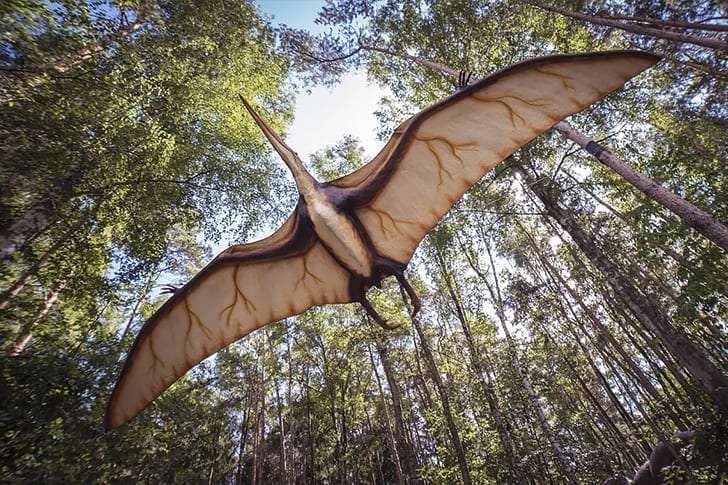
For the animal lovers, especially the people interested in prehistoric life, this is for you. Scientists in Canada, in the Alberta area, to be precise, discovered a frozen flying dinosaur that is said to be from the pterosaur species.
Like all prehistoric creatures, the reptile was quite humongous, with a wingspan of 16 feet, and lived during the Cretaceous period. At the time, Canada had relatively temperate weather conditions that supported the reptile's survival. It is surprising how the world has evolved over the years, that now the place is covered in ice.
Vegetarian Dinosaurs Existed Too
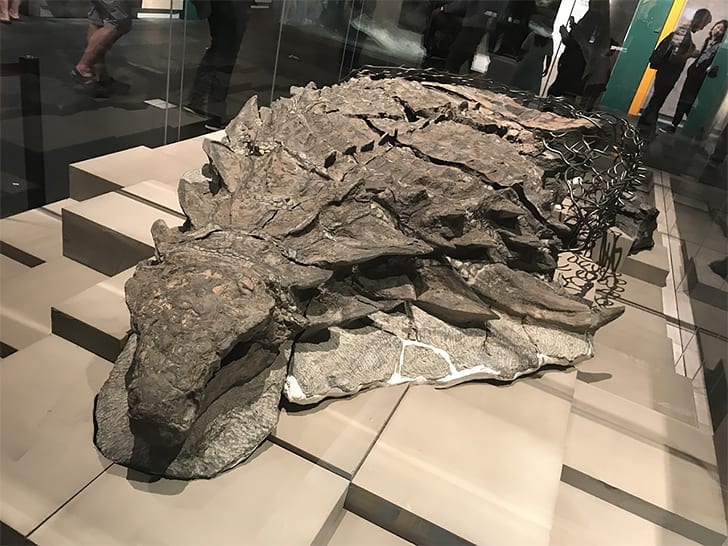
If you thought only modern-day animals and humans are vegetarian, then you thought wrong. Even ancient dinosaurs like the one found in Alberta in 2011 were also vegetarian and fed on plants, something that we bet would surprise many people.
Shawn Funk discovered the nodosaur fossil in the Millennium Mine and scientists today believe the creature walked the earth over 110 million years ago, weighing a jaw-dropping 3000 pounds. It seems the Alberta area is full of prehistoric creatures perfectly preserved, making us wonder what they will find next in the region.
The Tale of Yuka The Mammoth
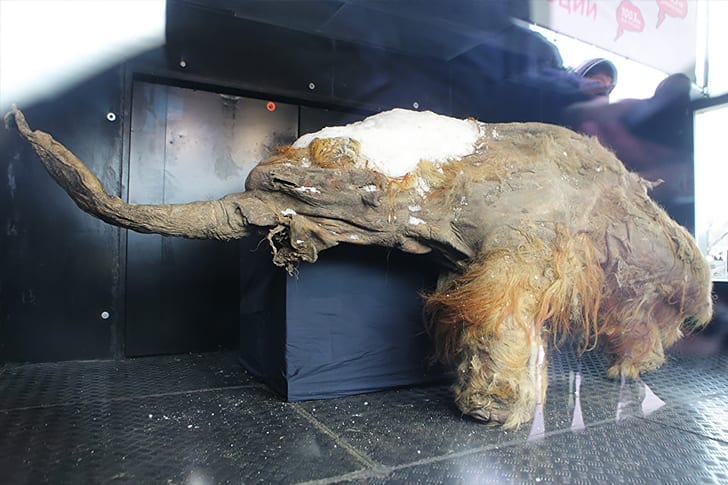
We are all familiar with the strange things that are such frequent discoveries in frosty Siberia. In 2010, scientists found a wooly mammoth, Yuka, conserved perfectly by the subzero Russian freezing temperatures. Currently estimated to be 39,000 years old, the remains were amazingly intact, with even the gentle giant's reddish fur in place, giving scientists more to work with to determine the mammal's size.
According to the experts, Yuka was a baby when she met her untimely demise, which appeared to be an attack from a cave lion species that has long become extinct.
Bringing Mammoths Back To Life
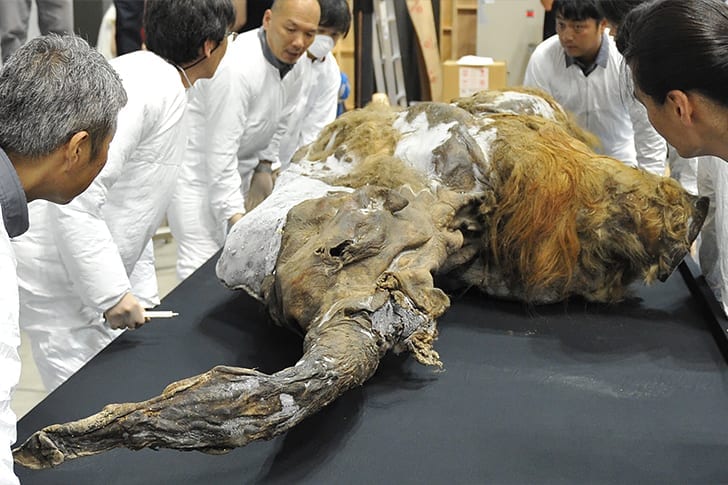
With Yuka's discovery, now more than ever, scientists are closer to knowing how ancient life worked and are on the verge of resurrecting the fossils, at least a version of them. The plan is to use cells from creatures like Yuka and combine them with a surrogate mother and voila! We have a species that is a blend of the past and current animals.
Experts from Japan and South Korea are already on this quest, and it seems like soon they will be able to make a breakthrough in their cloning experiments. It wouldn't be surprising to see some mammoths brought back from ancient times.
Beautiful Prehistoric Pups
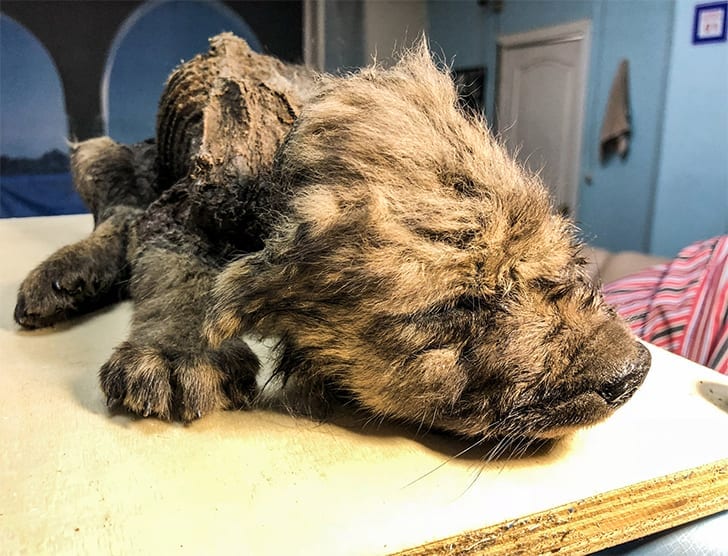
It seems puppies are generally cute regardless of where they come from and from which period if this discovery is anything to go by. This well-preserved puppy found in Siberia is said to be over 18,000 years old and has everything, including its whiskers, in perfect condition.
Named Dogor, which translates to 'friend' in the Yakut dialect, the animal has been a subject of discussion with scientists conflicted about its true nature, whether it's a dog or a wolf. We might never know what it truly is, but the specimen gives an interesting perspective of life then.
Ice Age Cubs
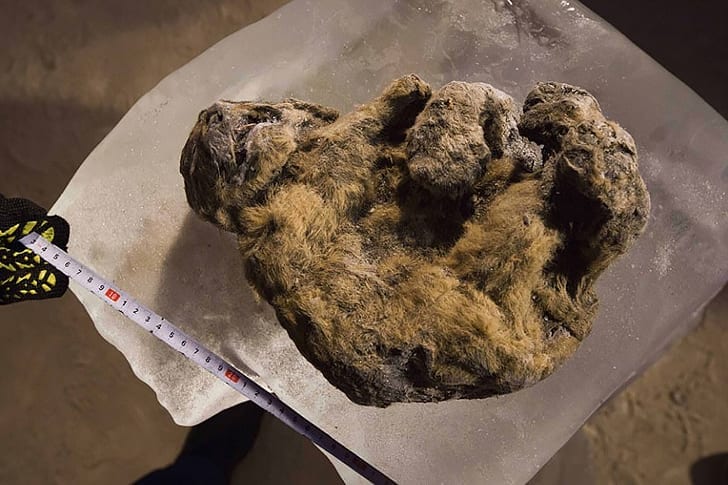
Puppies aren't the only creatures to be found frozen in Siberia; cubs, too, were recently discovered in the ice continent. Ages in the ice had so well preserved the felines that their fur and other organs were all intact, mesmerizing the scientists, considering that they're dated to be at least 10,000 years old.
The discovery presents a breakthrough in cave lion research. Since before these cubs made archeological headlines, experts had hitherto relied only on tracks and bones left behind, and no fossils were insight. We thank the ice for giving us this priceless piece of history!
The Strange Grasshopper Glacier
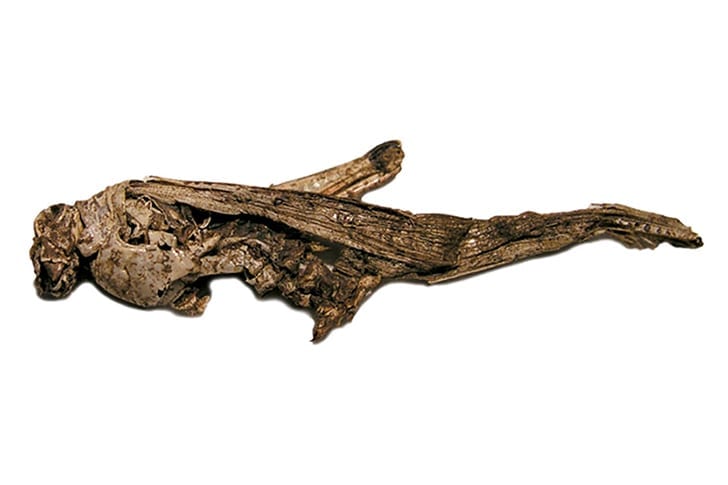
If your first move is to call the pest control office when you sight a cockroach or two, then you’ll have to hate this one. Right in Montana’s Beartooth Mountains, there is an ice formation known as the Grasshopper Glacier, with a distinct appearance somewhat reminiscent of the rough skin of an elephant.
Scientists later discovered that tens of millions of locusts were entombed in that glacier. According to one of their theories, these insects were trapped in the glacier by a snowstorm thousands of years ago while trying to migrate.
Historic Viruses Stored In Waste
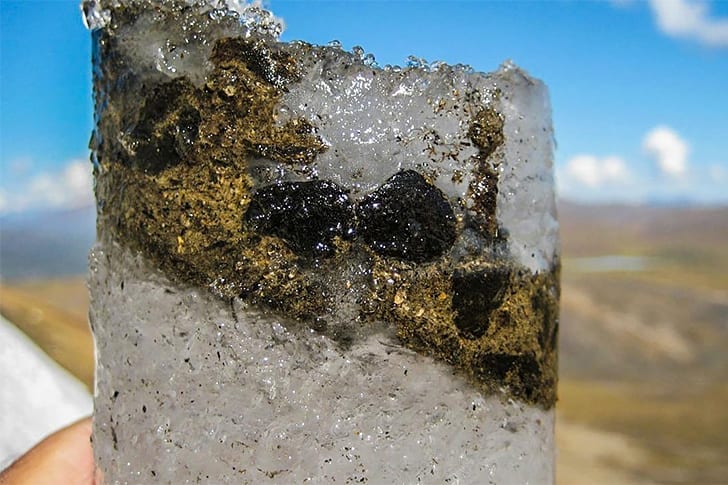
A trapped swarm of insects is not the only mysterious thing experts have discovered in these desolate wastelands. You should also know that scientists found a 700-year-old caribou frozen discharge containing two viruses, unseen and unheard of hitherto. The viruses were later associated with the vegetation that caribous ate. How these microorganisms somehow lasted hundreds of years inside the frozen remains baffled the authorities.
This uncovering supports the fact that certain parasites can survive decades and even centuries when left within a cool, friendly environment. What’s more interesting is that humans need not fear these two viruses as they are not capable of causing any harm.
Stay Away From Ancient Bacteria
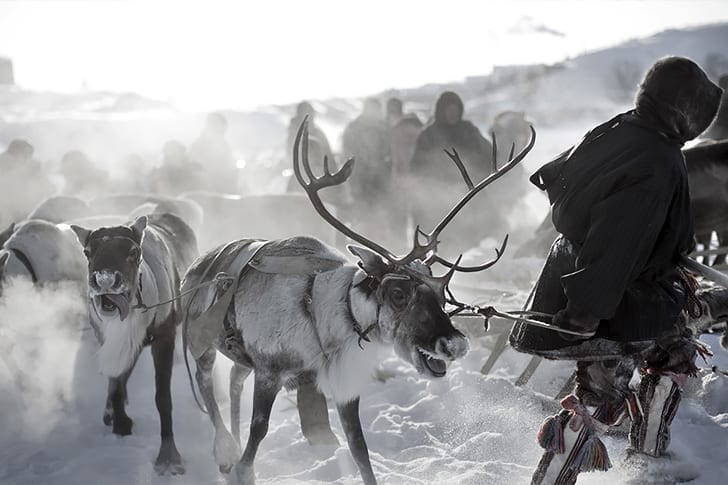
The tremendous potential threat to the health of humans is actually bacteria. In 2016, a Russian anthrax outbreak was due to a melted reindeer carcass infected by the bacterium many years before. Scientists believe that it thawed during a heatwave unleashing the dangerous pathogen as the remains warmed.
As the newly defrosted bacteria spread, dozens of people needed hospitalization, and 2,000 reindeer were reportedly infected. In fact, the outbreak was so severe that some families required airlifting from the Yamal Peninsula. In hindsight, according to some scientists, this was the outcome of climate change and not the last such incident expected to occur.
More Surprises In Animal Droppings
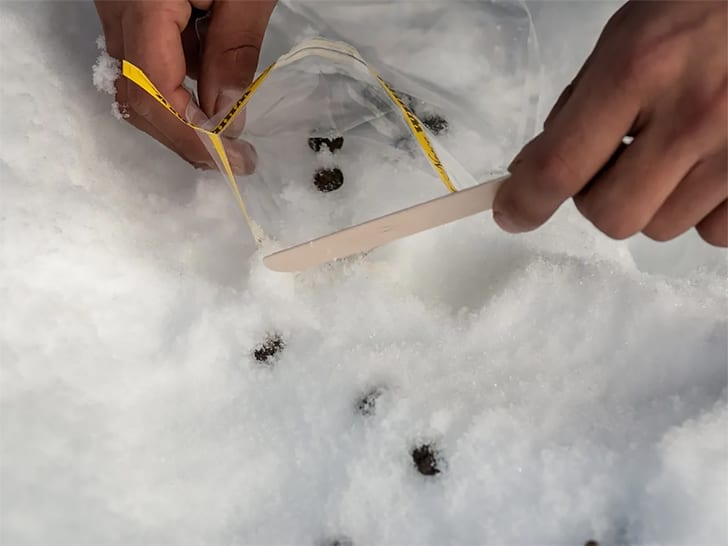
You may agree that not all discoveries involving animal excrement and carcasses are necessarily a bad find. Take, for example, the husband and wife who found an artifact of high value in a defrosting pile of caribou droppings. The couple was in Canada’s Yukon mountains on a hunting trip when they found a dart shaft section in the rapidly thawing droppings.
What was even more surprising was that the animals hadn’t been seen anywhere around the area for decades, but after scientific investigation, it was discovered that the droppings were from thousands of years ago and came from ancient herds in that area.
Ancient Weaponry Used By Native Americans

There have been many other findings in the south of Canada, like the 10,000-year-old atlatl dart discovered in 2010 around the Rocky Mountains. This hunting tool was spotted in an ice sheet with an initially straight shape but became curved when it thawed. It was designed from birch and had markings from the Ancient American Hunter who wielded it.
Tinier versions of the tool have also been found in other sites in the United States, and it is believed that most parents used them to teach their children survival and hunting skills.
Hunting Tools of the Past

The brilliant archeologist Tom Andrews couldn't express his joy of recovering artifacts in the Mackenzie Mountains after digging through the ice patches for several years. He compared his emotions with a child, who gets his favorite toy in the Christmas presents, and we totally relate with the archeological enthusiast!
The troop found a thousand-year-old squirrel trap, a willow bow, and approximately over two-thousand-year-old sharp spears hidden in the gigantic icebergs. It may seem like a few wooden bits to the layman, but Tom and his team know these hunting tools are no less than an ancient treasure!
Antiquated But Efficient
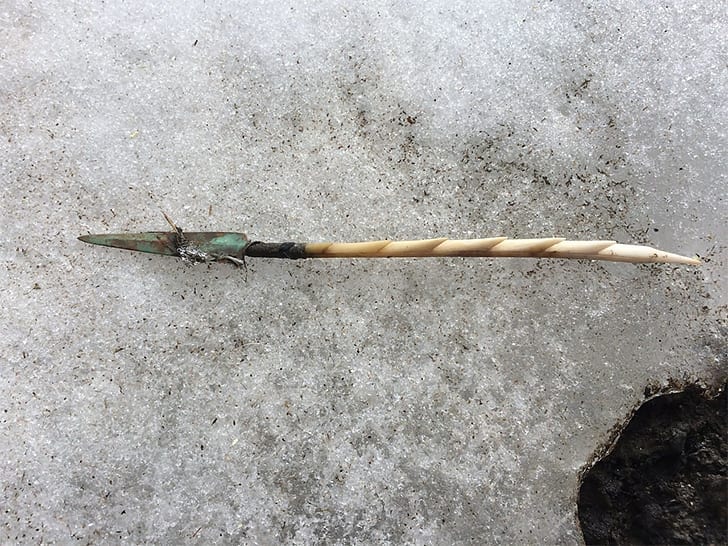
Usually, it's seen that metal or iron tools rust with time and lose their sharpness if not used regularly. But prolific archeologist Greg Hare discovered over thousand-year-old blades in Yukon that are still sharp enough to spear through any part of the human body in a split second!
Are you wondering why do scientists hunt for such old artifacts? Well, these findings help us to know questions like when did copper metallurgy reach the region. Hare shared that these arrowheads were probably manufactured at the onset of technology in the area to replace throwing darts - an older method also used by other inhabitants ages ago.
Remnants of Vikings
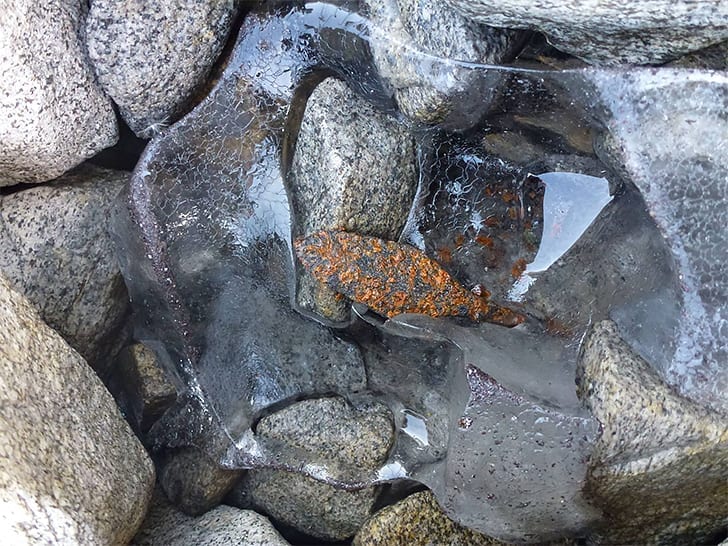
Most of us love watching movies about pirates and their adventures, so now, here is a sneak-peek into the world of non-fictional Vikings.
While researching through the Norwegian mountain pass, scientists found several artifacts, including footwears, old clothes, rusted hunting tools, and riding gears; no horned helmets as shown in the films, though! This extensive collection also led archeologists to believe that perhaps this was an important route for the seafaring group, but they had difficulty in traversing through the path. For those who find history subject boring, we are sure this discovery can change their opinion!
Melting Glaciers Reveal an Old Forest
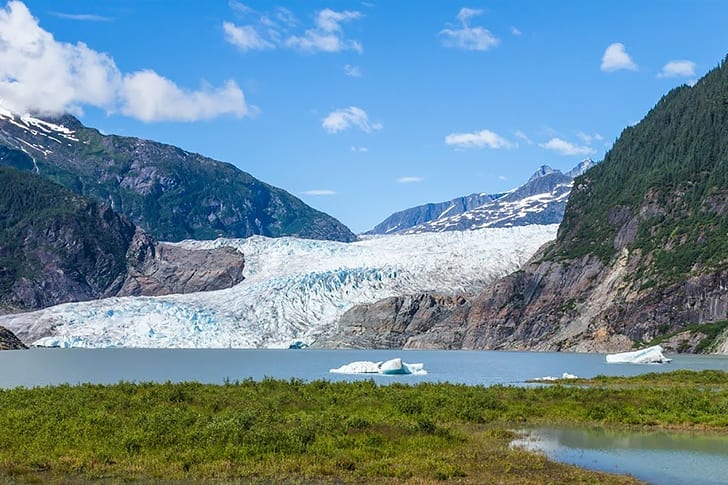
We all know underwater plants are a thing, but how often does it happen that an entire forest pops out of the ocean? Something similar happened in a water body near Alaska, where researchers witnessed a strange pattern of stumps and wooden logs popping out of the icy river in the upright position for the past 50 years.
It was found upon investigation that an entire forest of either hemlock or spruce trees got covered in thick layers of gravel, which further got submerged in the glacier with time. Sounds interesting, right?
A 650-Year-Old Basket
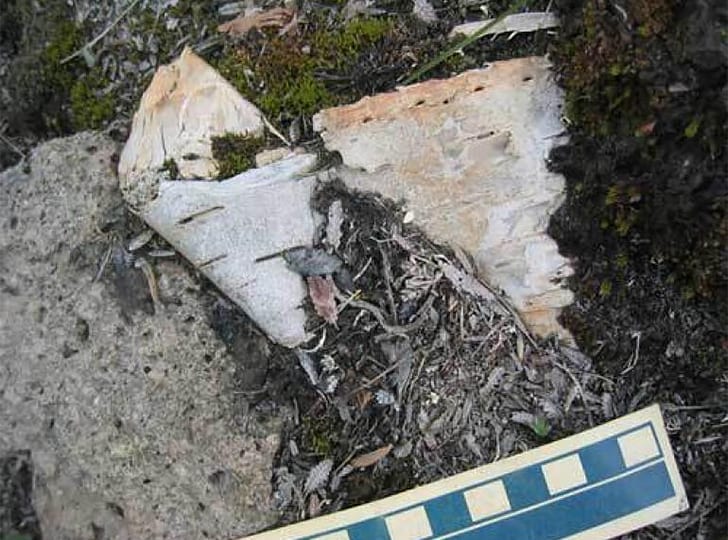
While we are talking about Alaska, let's take you a glimpse of what else the mighty forests can hold. From giants trees to tiny historic containers or precious stones, you can find almost everything covered under the snow patches. In the early-'00s, the renowned geologist William Manley with his group discovered a birch basket that was probably over 500 years old in the Saint Elias Mountains.
Even after all this time, the artifact was perfectly secured with stitching holes. Manley's team was searching for items like old clothes or tools to understand when he came across this basket.
The Fairytale-Like Lighthouse
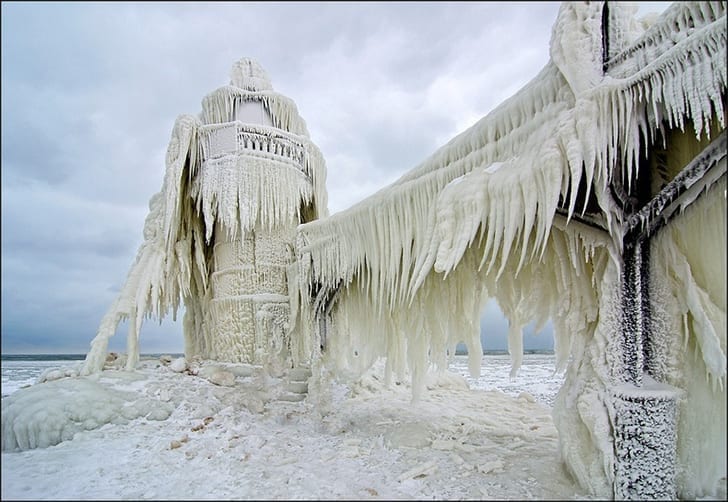
Sometimes great wonders happen when the mighty forces of nature encounter great architecture. Looking at this catchy photograph captured in Michigan, you cannot help but think it's something out of a fairy tale. The dream-like structure seems so good to be true.
However, this icy lighthouse is as real as it gets. The adjacent breakwater is to thank for bringing about this phenomenon when it splashes waves on the building. With a bit of help from strong winds coming from the right direction, the castle-like abode gets whipped by ice-cold water on three fronts giving it this magical appeal.
1952 Plane Crash Mystery Solved

Although air travel is considered one of the safest forms of transport, sometimes the unthinkable happens, and the plane crashes or goes missing for indefinite periods. That's what happened to this military aircraft that disappeared during the Cold War period in the fifties.
As fate had it, the airplane crashed in Alaska's Colony Glacier. That's quite unfortunate because even if you were to survive the impact, the frosty weather on the ground would suck you dry. Luckily, many decades down the line, the craft's remains and those of its passengers were found in 2020.
Treasure from the Ashes

Plane crashes are tragic and life-threatening by all means. It has to do with falling from the sky at high speed and then sometimes colliding with a not-so-friendly part of nature. Sometime in the sixties, an Air India plane crashed into Mont Blanc's summit, which happens to be France's highest and Europe's second-largest mountain.
The temperatures here are naturally unbearable, which complicated the rescue efforts of the 117 passengers who all tragically passed away. Nonetheless, a lucky Alpine climber found a treasure chest with around 100 jewels believed to have fallen off the craft in an exciting turn of events.
Frozen in Combat
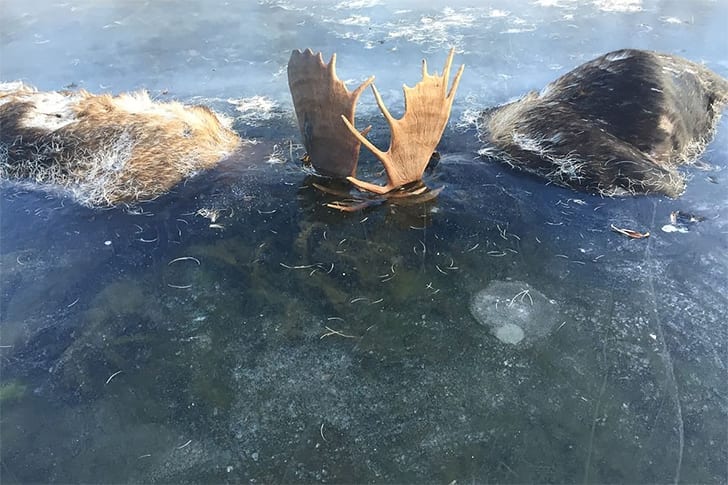
Alaska is a land of frozen wonders judging by this photo of two Bull Moose that froze right in the middle of a fight. One can see the battle stance that the two gigantic creatures had assumed with their antlers intertwined.
As fate had it, an 8-inch layer of ice slapped this beastly pair probably as they tried to disentangle their locked horns. Even their mighty strength could not save them from the powerful forces of nature, and the combative duo was discovered still in the same position by hikers many years later.
32,000-Year-Old Plant Lives Again

Wonders never cease in nature because as hard as it is for human, plant, or animal life to survive for hundreds of years, Russian researchers now boast of regenerating some 32,000-year-old seeds that date way back to the Ice Age.
The scientists discovered them on Kolyma River banks, at a spot about 124 feet below the Siberian permafrost. Although refrigeration is known to preserve food for extended periods, reviving plants that have been frozen for thousands of decades is not a joke. The world's oldest plant can give us a glimpse of our planet's vegetation in ancient times.
The Frozen Giant Squid
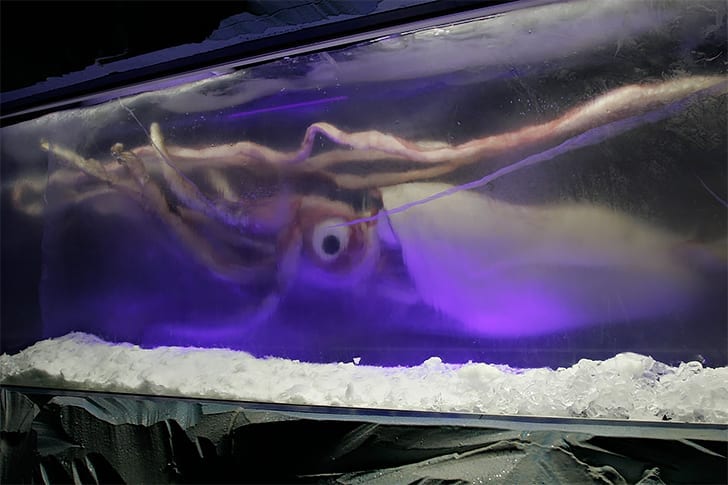
Most people work hard to get money to afford lavish lifestyles such as sports cars and mansions. Yet for Australian curator, Nick Kirby, spending $100,000 to get a giant squid transported to the Melbourne Aquarium and frozen for display was money very well spent, indeed.
Caught off the coast of New Zealand, the rare sea creature often demonized in myths weighs a whopping 550 pounds and is longer than 22 feet. It's preserved in an ice block of about four tons so that visitors can revel at the remarkable wonders of nature.
The Hibernating Wood Frogs
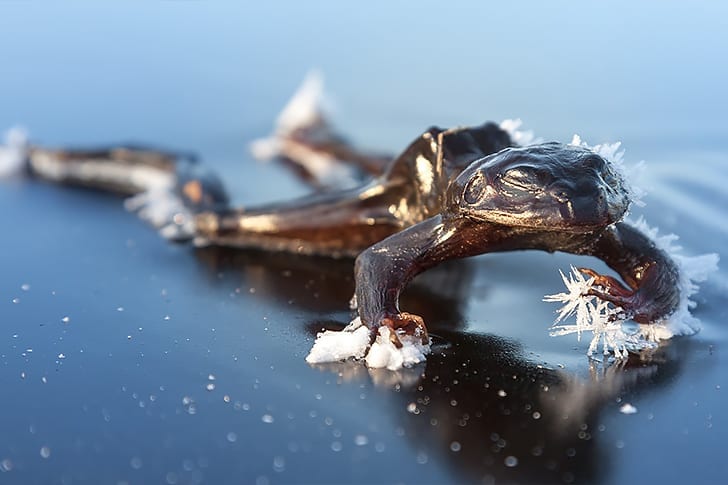
As much as human beings are wired to feel superior over other living creatures, you have to give credit where it's due. Alaska's wood frog's survival instinct deserves a Pulitzer, a Nobel Peace Prize, and a Grammy all at once. How they can hibernate during winter and "resurrect" come springtime is purely amazeballs.
Most amphibians tend to go under in streams and ponds, but this kind chooses to stay on land during cold seasons where they tuck themselves in well under the forest floor leaves. This way, they are protected against the ice and ready to awaken when the time comes.
A Friendly Helping Hand
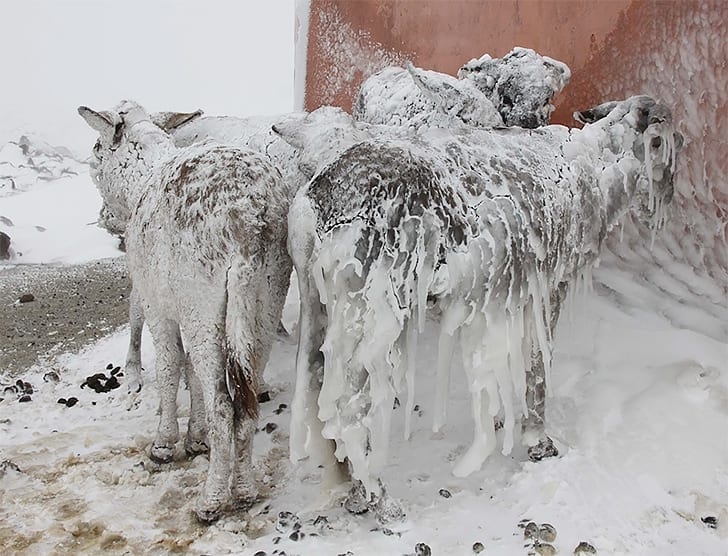
The picture of these poor, freezing donkeys huddled together in the snow spread on the internet like wildfire. The piteous animals presumably came from a remote rural village in Turkey, where someone took this picture. Fortunately, some residents went over to the donkeys' aid and removed the frost from their shivering bodies. The group survived and got out of their iced state, living, and whole.
Perhaps the most surprising revelation in the incident was the locals discovering that these hardy and resilient animals can survive even in extreme weather conditions. A feat made all the more impressive when you consider that donkeys don't have thick protective fur.
A Hapless Flight
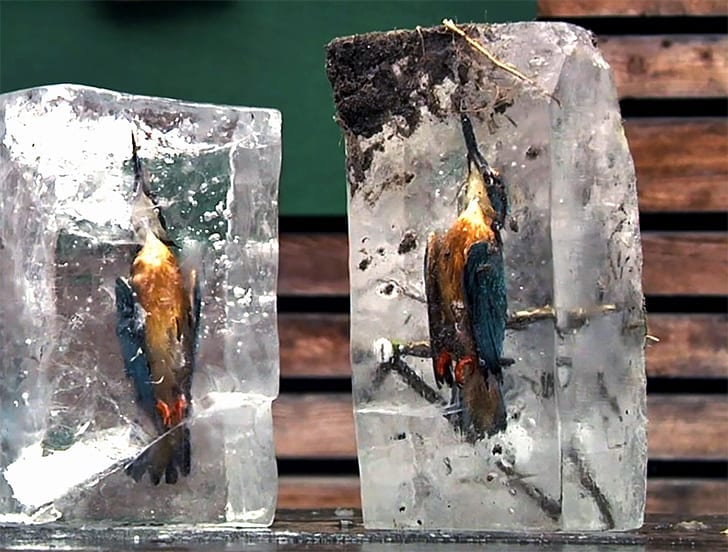
This kingfisher indeed had it rough for being caged in ice. Taking flight for a fishing mission, the beady-eyed diver didn't recognize how unbelievably chilly the Dutch inland waterways can be with sub-zero temperatures, so it got trapped in the rapidly freezing water, turning into an icy statue.
Sadly, according to the person who found this poor little bird, no one was available to help it in its desperate time. In the end, this kingfisher had no choice but to remain trapped below water as temperatures plummeted, making for a sad end for this poor creature.
A Message From the Past
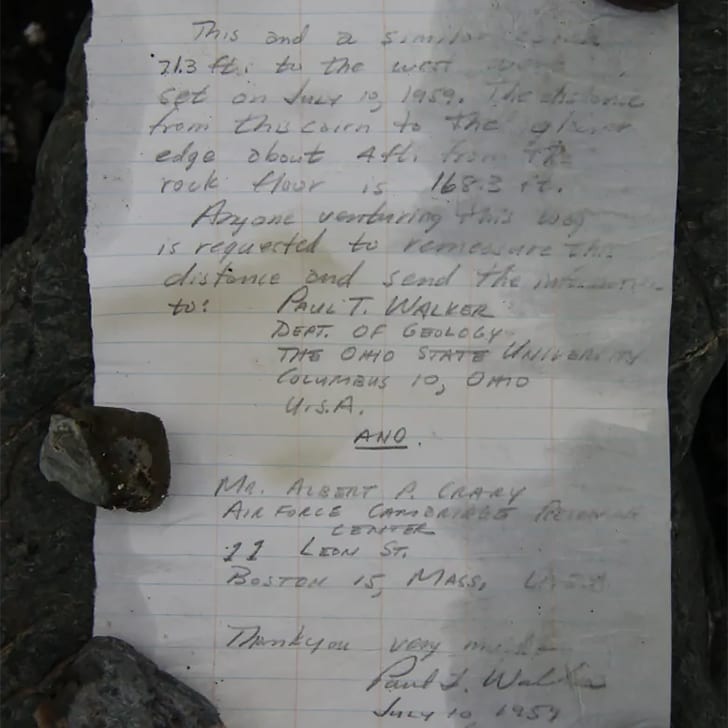
An American geologist intentionally left behind this message inside a bottle near a glacier in Canada in the 1950s. This aide-memoire had a few directives to the finder, allowing whoever found the note to discover eye-opening information. The geologist left clear instructions noting the measurement of the distance between the glacier and a cairn.
The now long-gone scientist was supposedly collecting data for studies on glacier movements over time but didn't have enough funding in the '50s. The distance was solely around four feet when the bottle was left behind and incredibly grew to over 330 feet by 2013, astounding experts everywhere.
Arctic Predators
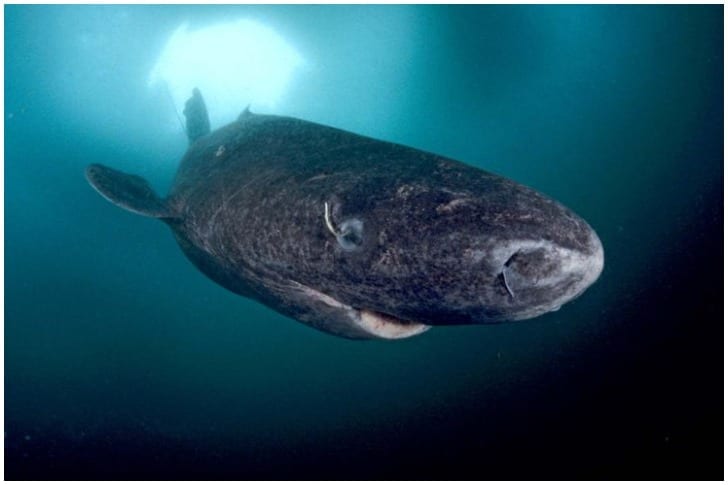
Besides the dinosaurs' existence, are you aware of this shark's over four centuries-long lifespans? Found beneath the deep polar waters near Greenland is a southern sleeping shark also known as Somniosus antarcticus. They are purportedly as blind as a bat and can grow to over 12-feet! Though they swim at an intensely slow pace, these massive predators are voraciously hungry and will swallow anything in their pathway, including humans.
Scientists keep finding fascinating facts in the farthest parts of the planet and discover hidden secrets that lie underneath the surface - especially what eerily lounges below the thick layers of ice in far polar regions.
An Ancient Arctic Burgh
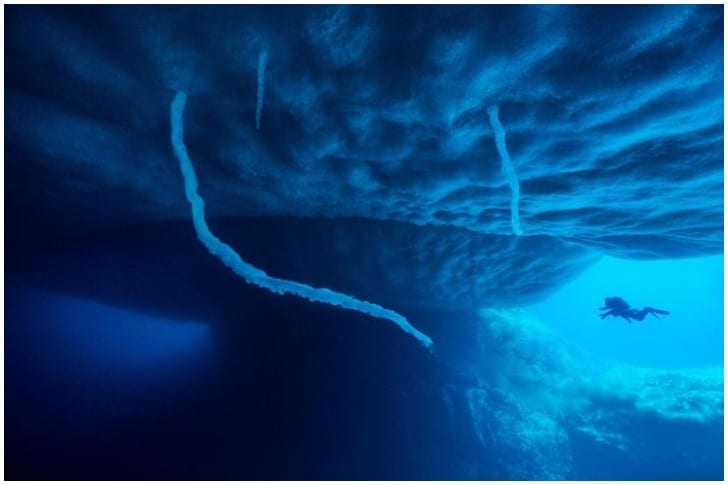
While we haven't explored 95% of the oceans due to their inhospitable sub-zero temperatures, researchers recently made massive strides in their study. They found a fascinating ancient civilization under the waters - An Antarctic remains that resembled a city!
Scientists believe that Antarctica was once part of Gondwanaland that Australia's landmass eventually broke away from, giving proof of human presence in these now un-livable areas. Although we don't know how ancient this city, the murky depths indeed have many stories to tell. If human existence is proved so far off in ancient times, who knows what's next, exciting no?
Lava Lake on Ice!
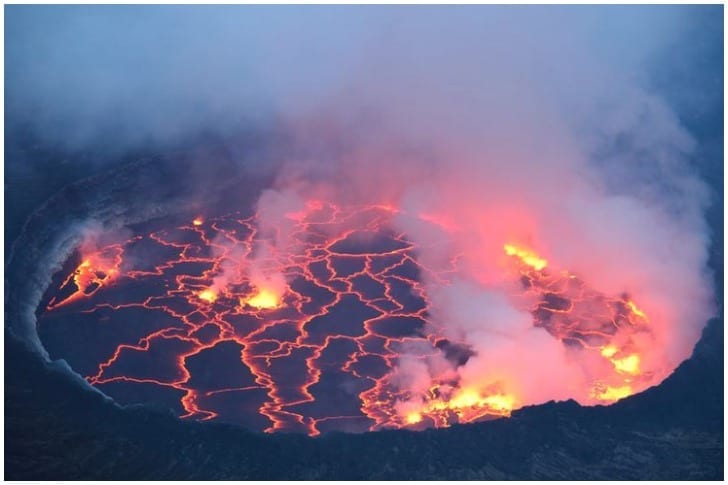
Lava and ice are two contrasting elements. And maybe you've never heard of them co-existing until now! Mount Erebus is a volcano located in the southernmost part of Antarctica, and it is one of those few places on earth where you will find a lava lake surrounded by ice.
With a height of over 12,000 ft, Erebus is one of the highest mountains in the world. This peak was also the scene of a tragedy in 1979 when an airplane crashed near the crater. Scientists today believe that this lava lake continually affects our ozone layer, and there's nothing we can do about it - scary, no?
The Mysterious 300 Mile Crater
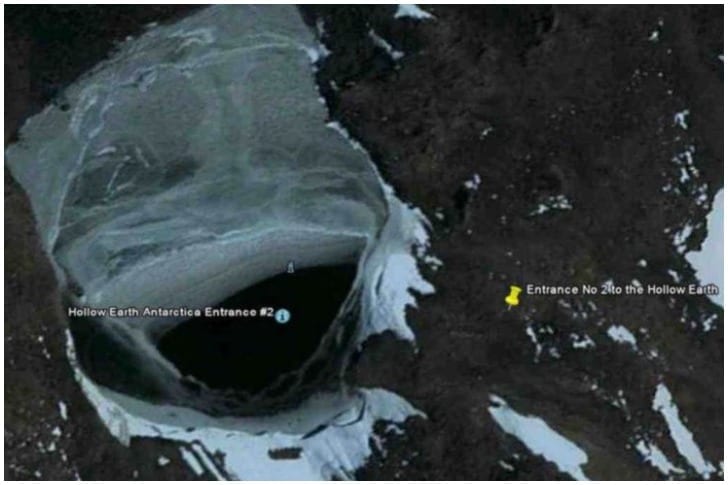
Certain discoveries remain captivating mysteries, and this 300-mile long crater is one of them. Scientists have estimated that this crater is over 250 million years old! But the main question is, how was such a massive hole created in the first place?
Science doesn't seem to have any answers for this, and it has left Social
Media to its work. Many people have come with crazy theories claiming the crater is an entrance to the earth's hollow center or that aliens indeed created it. True or not, these theories do make for an entertaining read.
Lethal Bacteria Preserved by Ice
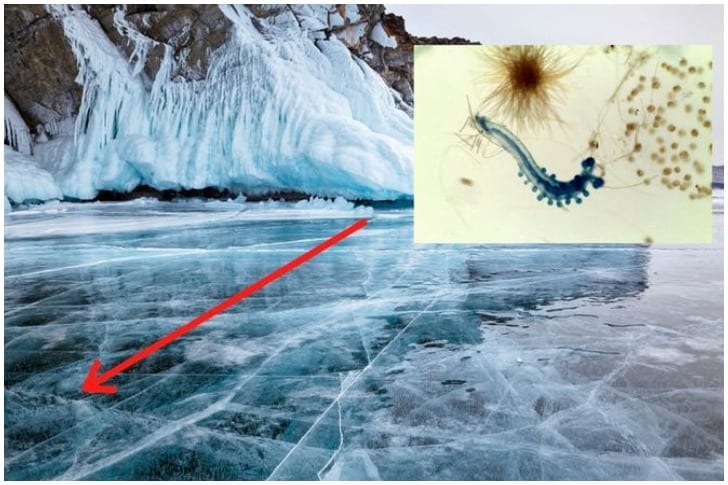
Ice is said to hold a lot of things from the prehistoric era. Researchers and scientists have found mammals, mummies, and artifacts completely preserved in mint condition. However, the Siberian frozen wastelands have something far more lethal stored inside. Recent studies show that the region holds many dangerous viruses and bacteria dating back from the earth's primordial history.
Scientists today are claiming that these bacteria are far more contagious than anthrax and even the bubonic plague, which is a stark reminder that our environment safeguards us from the horrors present all around us.
The Dangerous Antarctic Feather Start
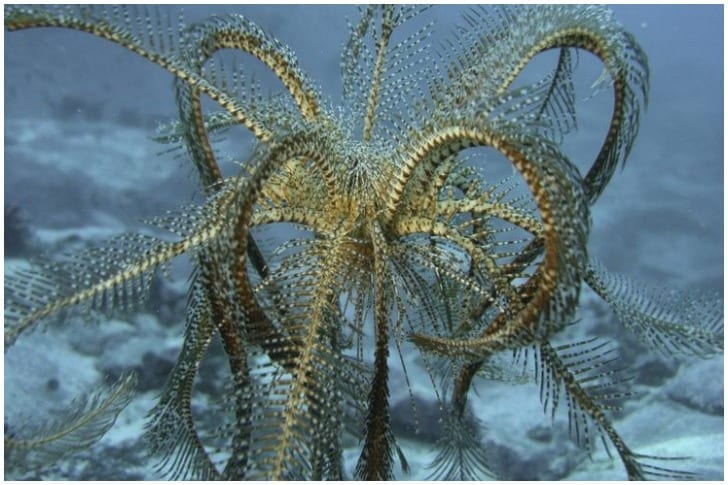
Our Mother Earth can be a thing of beauty sometimes, but on other occasions, it can be equally horrifying as well. This Feather Star is one of the fatal plants found in the Antarctic. The organism comes packed with dangerous toxic spines and sport a long tentacle-heavy structure.
At first glance, this plant looks like it came straight from a Hollywood horror film set in an alien world. That's how frightening the Feather Star looks! On another note, Antarctica is generally a tough place to survive, so we guess the growth's aggressive defensive features are justified.
Gigantic Spiders
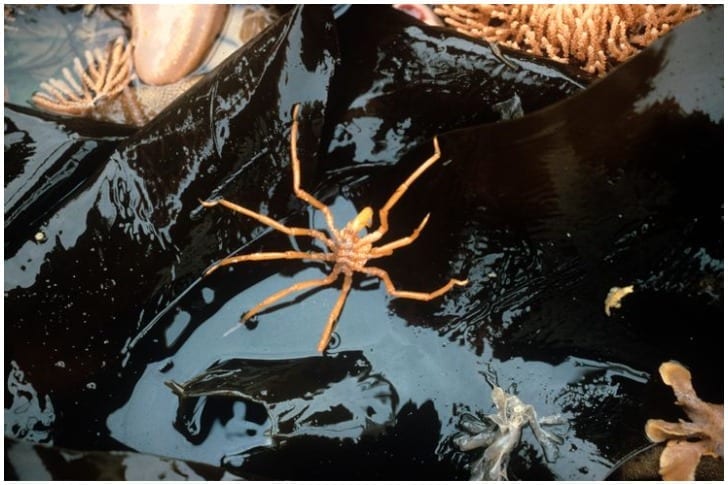
Spiders are, in general, very creepy insects. So the thought behind gigantic spiders roaming about freely is enough to send chills down our spine. But guess what, researchers have already found monster spiders on the coast of Antarctica.
The science behind why these spiders are so perceptibly giant compared to regular spiders is the phenomenon called Polar Gigantism. With legs as long as 1 to 1.5 feet used for breathing, these enormous arachnids can move a lot faster, and they usually prey on smaller insects and fishes found on the coast.
Egyptian Pyramids' Older Brothers
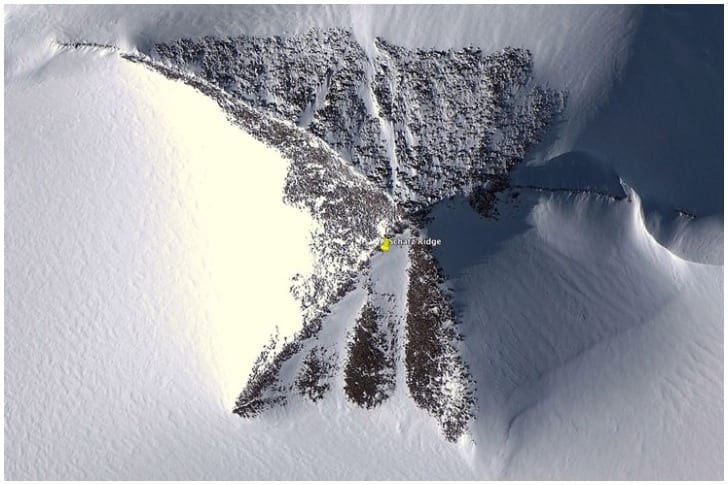
The pyramids in Egypt are undoubtedly a thing of immense beauty, but if Antarctica's new findings are anything to go by, then there might be some equally astonishing cone structures, only even older. Researchers believe that millions of years ago, there was an ancient civilization that thrived in lush vegetation and had to adapt to the ice-cold climate over time.
There hasn't been any confirmation about the pyramid-like towers, but we hope archeologists will find out more about the region. If it's true there were people who called the ice continent home; then it proves humanity's capability to dwell anywhere.
Earth's Cooler Box
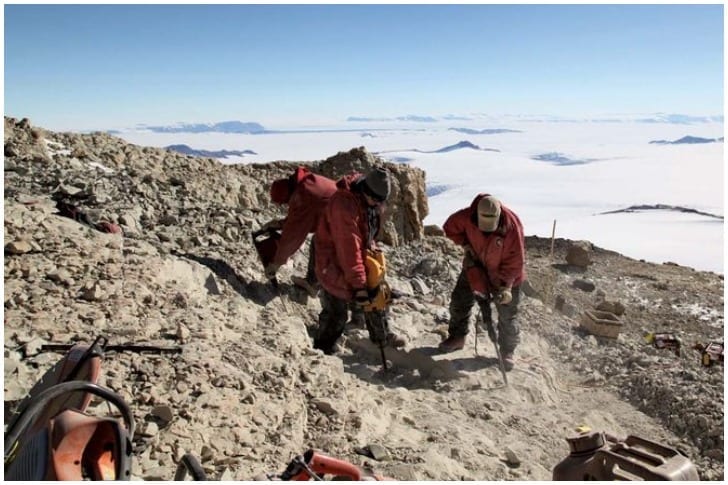
Antarctica is known for many reasons, mainly through its famous as the massive ice land humans can't survive on. However, recent discoveries have shown that before the continent broke off from the Gondwana supercontinent, an event that left it almost lifeless was bursting with human life and lush vegetation.
Scientists have found numerous artifacts like those discovered in Yellowstone Park which date back to the Permian period, over 280 million years ago, showing that the frosted chunk of land can preserve items from prehistoric times, which can help us learn more about our beloved planet.
World War II Artifacts
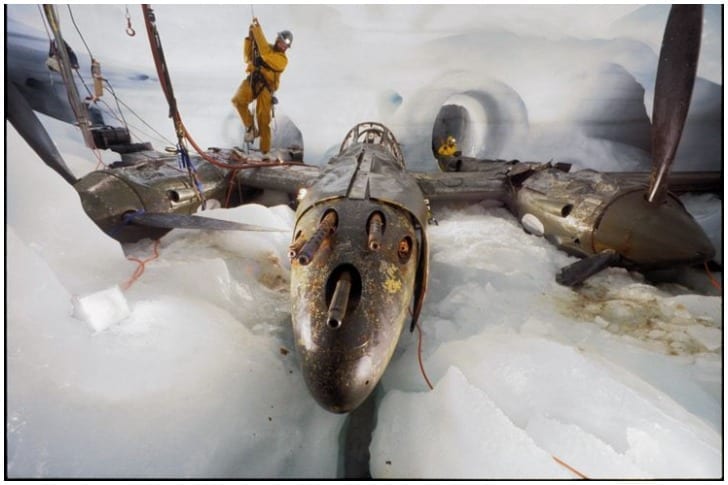
World War II was a distressing event for everyone in the world; many people were tragically lost and lots of properties destroyed. Still reminding us of those days, there are many monuments worldwide, but some crashed planes in Greenland serve as a stark reminder too.
Some soldiers from an 8-plane squadron found out the hard way that flying in the ice plains was a bad idea when their aircraft crashed, and while teams rescued some members of the group, others sadly passed on. Recently, a P-38 plane was found lodged beneath 300-feet of ice, and explorers are on a quest to find more jets in the area.